Hunting is an essential survival skill for many animals in the wild, and both dogs and cats have evolved their own unique methods for capturing prey. While both belong to the same family, Carnivora, and share some common traits, their hunting techniques differ significantly. The reasons behind these differences lie in their evolutionary history, physical characteristics, and behavioral tendencies. While both are carnivorous mammals, their ancestors followed different evolutionary paths that shaped their behavior and hunting strategies.
Before delving into the specifics of hunting styles, it's essential to consider the evolutionary backgrounds of dogs and cats. While both are carnivorous mammals, their ancestors followed different evolutionary paths that shaped their behavior and hunting strategies.
Dogs belong to the family Canidae, and their ancestors were pack hunters. The domestic dog (Canis lupus familiaris) evolved from wolves, which were known for hunting in groups. Over time, domestication led to variations in behavior, but many of the predatory instincts inherited from their wolf ancestors remain. As a result, dogs often rely on cooperation, stamina, and endurance in their hunting strategies.
Cats, on the other hand, are members of the family Felidae, and their evolutionary ancestors were solitary hunters. The domestic cat (Felis catus) evolved from wildcats, which primarily hunted alone. Cats' hunting styles have been shaped by their solitary nature, focusing on stealth, speed, and precision. Unlike dogs, cats are more likely to use their sharp claws and agility to ambush and capture prey.
Pack Hunting: One of the key features of a dog’s hunting style is its tendency to hunt in packs. Wild canids such as wolves and African wild dogs work together to bring down prey. They use coordination, communication, and strategic planning to hunt larger animals. Dogs’ ability to communicate with each other through vocalizations, body language, and scent plays a critical role in this cooperative effort.
In a pack, dogs often use a strategy called "driving," in which some members of the pack chase the prey while others lie in wait to ambush or corner it. This teamwork allows them to exhaust their prey over long distances. For example, wolves can run at high speeds for extended periods of time, tiring out animals such as deer or elk, and then work together to take down the weakened animal.
Even domesticated dogs retain the instinct to chase and work with others. Herding breeds like Border Collies or Australian Shepherds display strong instincts to gather or corral animals, which is a modern reflection of their wild ancestors’ pack hunting techniques.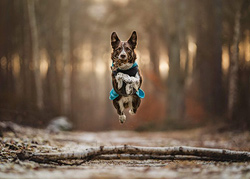
Endurance and Stamina: Dogs are built for endurance. Their physical traits, such as long legs, strong muscles, and efficient cardiovascular systems, make them excellent long-distance runners. Many hunting dogs, such as Greyhounds, can chase prey at high speeds for short bursts, while breeds like the Rhodesian Ridgeback or the Coonhound are known for stamina, able to track and chase animals for hours or even days.
Dogs also use scent to track their prey. Their highly developed sense of smell allows them to follow a scent trail across vast distances. Some dogs, like bloodhounds, are particularly skilled in scent tracking, able to detect minute traces of an animal’s presence, even days after it has passed.
Cats, in contrast to dogs, have evolved to be solitary hunters. Their hunting techniques are characterized by stealth, precision, and agility, which make them highly effective at capturing smaller prey such as rodents, birds, and insects.
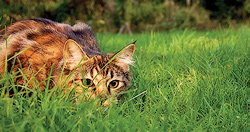
Stealth and Ambush: Cats are known for their ability to stalk and ambush prey. They have keen senses of sight and hearing, which they use to detect potential prey from a distance. Unlike dogs, who may chase their prey over long distances, cats typically rely on their ability to move quietly and unseen, often staying hidden in wait for the perfect moment to strike.
The physical build of a cat supports its stealthy hunting style. With flexible bodies, sharp claws, and retractable claws, cats can creep up on their prey without being detected. Their low center of gravity and ability to move silently allow them to get close enough to pounce and capture their target in a single swift motion.
Ambush Predators: Once a cat has successfully stalked its prey to within striking distance, it will pounce. Cats are ambush predators, meaning they prefer to lie in wait and then launch a surprise attack when the opportunity arises. This strategy is particularly effective when hunting smaller, faster-moving prey like rodents or birds.
Cats’ keen eyesight also plays a role in their hunting success. They have excellent night vision, allowing them to hunt during dusk or dawn when many prey species are most active. Cats often rely on this advantage to capture prey in low light conditions, giving them the element of surprise.
Precision and Agility: When it comes to making the final move, cats rely on their agility and quick reflexes. They can leap distances far greater than their body length, which enables them to close the gap between themselves and their prey with ease. Their sharp retractable claws give them the ability to hold onto prey and avoid slipping away. After making the kill, cats often play with their prey before delivering the fatal bite, which is typically aimed at the neck to sever the spinal cord.
Cats are also known for their ability to adapt their hunting style depending on the environment and the prey they encounter. For example, domestic cats that live in urban environments may adjust their hunting patterns to focus on small animals like mice, birds, and even insects. Their ability to adapt to various environments is a testament to their versatility as predators.
The Role of Socialization and Domestication
The hunting styles of both dogs and cats have also been influenced by domestication. Domesticated dogs often hunt with humans, either through formalized hunting activities (like bird hunting or retrieving) or through recreational play (chasing balls or frisbees). Despite this domestication, many dogs retain their predatory instincts, and their hunting behaviors can still be seen in their interactions with toys or other animals.
Domesticated cats, however, are more independent in their hunting habits. Even indoor cats display hunting behavior, such as chasing after toys or pouncing on moving objects. Cats retain the instincts of their wild ancestors and will often hunt small creatures like insects or mice when given the opportunity, regardless of whether they are hungry. Their instinct to hunt is driven by both survival but also an inherent need for mental stimulation.
|