cmyk-sharpened.jpg) When the heat of summer settles in, the place to be is on a river. Fortunately, several rivers and their tributaries slice through the Canyon Country: the Green, San Rafael, Dirty Devil, Dolores, Fremont, San Juan, and the Colorado. Several have headwaters in Utah, but the Green, Colorado, and San Juan rivers begin outside the state before they wind their way through Canyon Country.
When the heat of summer settles in, the place to be is on a river. Fortunately, several rivers and their tributaries slice through the Canyon Country: the Green, San Rafael, Dirty Devil, Dolores, Fremont, San Juan, and the Colorado. Several have headwaters in Utah, but the Green, Colorado, and San Juan rivers begin outside the state before they wind their way through Canyon Country.
The Green River starts up in Wyoming’s Wind River Range and continues for 730 miles to a junction with the Colorado River in Canyonlands National Park. There is a hike to the confluence overlook in the Needles District of Canyonlands National Park, but that’s a long, hot hike in summer. Most visitor see the confluence by boat before the mixed waters descend through the rapids of Cataract Canyon.
The mighty Colorado River begins as a small stream in the Rocky Mountains of Colorado before it meanders for 1,450 miles to the Gulf of California arriving as barely a trickle or not at all. Pioneers described the river as, “…too thin to plow and too thick to drink.” Passing through seven states and connecting two nations, this river is referred to as the “Lifeline of the Southwest.”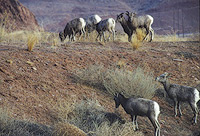
The San Juan River rises in Colorado’s San Juan Mountains and embarks on a 383-mile journey to its confluence with the Colorado River in Lake Powell, cutting through some spectacular geologic formations.
These rivers have navigable stretches of calm, flat water and/or heart-pounding whitewater and when the heat is on, the river is the place to go.
Floating past thickets of willow and the invasive tamarisk or dense stands of cottonwoods stands in stark contrast to the drier uplands. Though the trees may provide some shade when on land, the willows and tamarisk often form impenetrable walls of vegetation. Difficult for humans to navigate through, but perfect for wildlife to hide in such as songbirds, bobcats, otters, beavers, and small rodents.
 The cottonwood trees also house numerous bird species such as red-naped suckers and Bullock’s orioles with their sock-like hanging nests. Great blue herons also build their nests high up in the cottonwoods, often in close quarters with their neighbors. One nice rookery to view is just below the Colorado River Daily take-out and upstream from the Big Bend Campground. You might catch a glimpse of some desert bighorns wandering along the riverbanks or getting a drink straight from the river near this location.
Other wildlife to watch out for are river otters and beavers.
Beavers are the largest rodent in North America, and the impact of the fur trade on these creatures reached across much of the western United States and southern Canada. Trapped for their pelts, beaver populations crashed during this time period.
Though beavers do cut down trees for food and dam building, their presence on the landscape offsets this activity. Dams hold back water and create pools for a wide variety of fish and wildlife. These pools raise the water table along the streambank, thus enabling plants to become established while slowing down erosion.
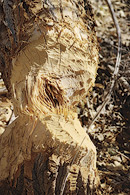
Beavers won’t try to dam the main channel of the Colorado because of the water flow, but many of the side canyons show either historical or current beaver activity. Courthouse Wash in Arches National Park, is a good place to view the actions of these busy creatures.
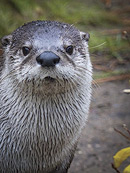
Years ago, seeing a river otter was a rare occurrence. Various state Wildlife Resource agencies began reintroducing otters in the Colorado River watershed starting in the 1970s. Today, this successful program has otters in all the main rivers.
So, while you’re out running river this summer, keep an eye out for these and other wild creatures that call the river corridor home. And watch out for those “sneaker waves” of the bail bucket variety!

 A natural history writer.