Over the winter holiday, birders in North and Central America have grabbed their binoculars and spotting scopes and taken to the field to engage in the
Christmas Bird Count, better known as the “CBC”. The count represents the longest running citizen-science project in North America; this year represents the 126th CBC.
The idea for the first count was organized by Frank Chapman, an early officer of the fledgling National Audubon Society and ornithologist with the American Museum of Natural History, in 1900. Chapman was a curator of birds at the Museum and also wrote several books about birding. His idea for the CBC was a stark contrast to another Christmas holiday activity known as the “Side Hunt,” where teams of hunters competed with each other and spend the day bagging birds and mammals. The team with the greatest number of quarry, would win.
Shocked by this wanton waste of wildlife, Chapman and 26 other birders, spent Christmas Day, 1900 counting birds in their home areas: places such as Keene, NH; Oberlin, OH; Central Park, NY; Pacific Grove, CA; and Toronto, Ontario. The 27 participants, across 25 counts, recorded a total of 90 species. Birdwatching or “birding” was not a common pastime back in 1900, so these early birders were really pioneers in their passion for wildlife conservation.
Inspired by these early individuals, other counts began to hatch across the country and into parts of Canada, Latin America, and the Caribbean. The National Audubon Society collected and organized the data over the years and this provided an excellent view of not only wintering bird distribution across North America, but also a snapshot of how bird populations have fluctuated over that time. Today, conservation biologists, wildlife advocates, or private parties can access and dive deeper into the publicly-available data, to review species numbers and distributions and to inform decision makers on protecting birds and their habitats.
In 2024, for the 125th annual Christmas Bird Count, there were 2677 counts held in North and Latin America, the Caribbean, and Pacific Islands bagging 2380 species. Over 83,000 people participated, some on more than one count.
The Moab Christmas Bird Count began in 1985 with 13 participants who counted 65 species of birds. Unique amongst that first count were American tree sparrows, a northern breeding species that doesn’t get recorded each year, and zero owls. Quite obviously, no one went out at night. This year the count will be held on December 20. Compiler Marcy Hafner organizes and sorts teams of birders to cover various areas within the 15-mile diameter count circle which is centered near Coffee Pot Rock, north of Grandstaff Canyon. Teams divide up into zones that cover Castle Valley, Moab and Spanish Valley, along the Colorado River, parts of Arches National Park, and the area around Sand Flats. Habitats include wetlands, canyons, residential and agricultural areas, wooded forests, riparian woodlands, sagebrush, and more.
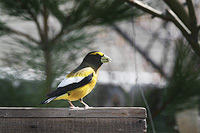
Included in the overall count numbers, are species seen three days prior to or three days post Count Day, as well as species and numbers recorded by feeder watchers – which is a great way for those staying at home to participate in the count. It’s usually a pretty eventful day, and a fun and social outing for those who participate.
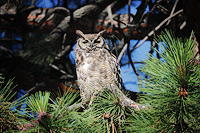
Hafner assigns birders to various groups who then fan out into the different zones and count birds by sight and sound. In 2024, 53 participants counted 73 species, with some noted species being white-winged doves, golden and bald eagles, lesser scaup, and a great horned owl.
A follow-up potluck, bring a dish to share and plate settings, will be held on December 21 at 10:00 a.m. at The Nature Conservancy office, 820 Kane Creek Boulevard to exchange stories and compile count data. Interested participants of all birding abilities should contact Hafner at marcymoab@yahoo.com to sign up for the Moab CBC and see what the fuss surrounding this 126-year-old bird count is all about.

 A natural history writer.