|
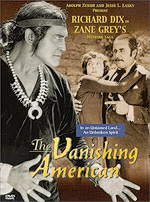 After Moab’s uranium mining industry declined in the 1980s, a group of community leaders got together to discuss ways to boost the local economy. One idea was to revive the region’s film industry that first emerged in 1925, with the making of The Vanishing American in Monument Valley. After Moab’s uranium mining industry declined in the 1980s, a group of community leaders got together to discuss ways to boost the local economy. One idea was to revive the region’s film industry that first emerged in 1925, with the making of The Vanishing American in Monument Valley.
Moab resident Sherri Griffith, former owner of Sherri Griffith Expeditions, recalled how she and the late Bette Stanton (author of Where God Put the West: A Moab-Monument Valley Movie History), plus others, formed an economic development committee to determine how to bring back jobs. The newly formed board of directors settled on three areas of focus: bring back the film industry, promote tourism, and encourage small business development that would support both tourism and the film industry.
Griffith was elected Board of Directors President of Moab Film Promotion in 1986, a position she held for three years. Eventually, the economic development organization, which Griffith continued to serve on for many years, changed its name to Moab Film Commission.
One of the local businesses that sprung up as a result of the newly revived film industry was one founded by Griffith’s brother, Ron Griffith. His Griffith Production Services supported the making of commercials, music videos and other small productions.
“He would see what people needed and found people around town who could help and needed jobs – which was the whole idea,” Sherri Griffith said.
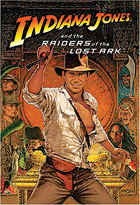
Griffith worked on a few movies, herself – such as Indiana Jones and the Last Crusade, starring Harrison Ford and River Phoenix. She recalled an opening scene where Phoenix (who portrayed a young Indiana Jones (Ford) was asked to mount a horse. Phoenix refused, however, upon learning the saddle was made of leather – because he was “vegan.” So, production halted while the crew located a plastic saddle, recalled Griffith.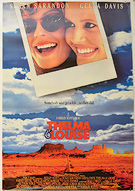
Another time, at a site inspection, Griffith met a producer who told her he loved her name. A year or so later, during the making of the film Nightmare at Noon, Griffith introduced herself as Sherri Griffith to an actor who replied “no, you’re not Sherri Griffith; Kimberly got the part.” To Griffith’s surprise, the producer had actually used her name for one of his characters.
Griffith’s river rafting company worked on a couple of commercials, and sometimes took actors – like Susan Sarandon and Geena Davis (from the movie Thelma and Louise) on river rafting excursions on their days off.
As Grand County continued to focus on long-range economic development, new facilities were constructed such as the Old Spanish Trail Arena which could be used as a “covered set” – a type of facility requested by the producers and directors working in southeast Utah.
In 1988, the Moab Film Commission expanded to include all of San Juan County in its location promotion, eventually changing its name to Moab to Monument Valley Film Commission. The film commission is the longest ongoing film promotion and assistance group on record.
|